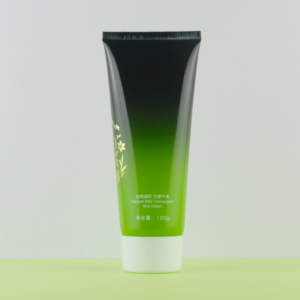
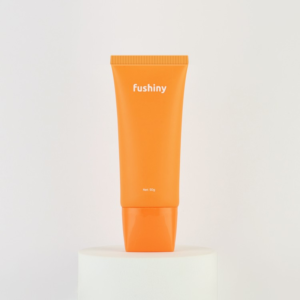
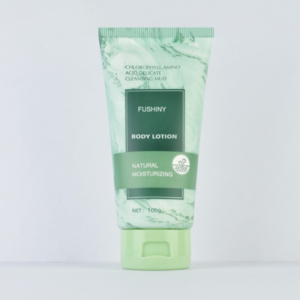
Plastic squeeze tubes have become a very common product packaging in people’s daily lives, such as cosmetic tube packaging and toothpaste packaging. These tubes are usually made from low-density polyethylene (LDPE) as a base material. Plastic tubes are the preferred packaging for cosmetics, skin care products, toothpaste, and pharmaceuticals, because they are lightweight, flexible, durable, cheap, and effectively protect their contents and extend product shelf life. Furthermore, plastic squeeze tubes can be customized with colors, finishes and printed patterns, playing a crucial role in shaping a product’s brand image.
However, producing a high-quality plastic tube is not an easy task; it requires many complex processes such as extrusion, printing, injection head, sealing and capping.
Fushiny can produce 2-layer and 5-layer plastic squeeze tubes. The 5-layer plastic squeeze tube contains Ethylene Vinyl Alcohol Copolymer (EVOH) in the middle layer, which has a dense structure that effectively blocks oxygen and moisture from the air, thus providing excellent protection for the contents. Therefore, 5-layer extruded tubes are often used in high-end products or products requiring air barrier properties. 2-layer squeeze tubes are more common, meeting the packaging needs of most lotion and cream formulations.
Let’s take a 2-layer extruded tube as an example to illustrate its manufacturing process. The inner layer of the 2-layer tube, which is in direct contact with the contents, is composed of LDPE and HDPE, while the outer layer, the printing layer, is composed of LDPE and LLDPE. This tubes effectively protects the contents and prevents bursting during sealing. These resins are usually white or clear, but we can add color concentrate to customize the desired color.

Extrusion
First, mix the resins and pour into different barrels, then heat the resins to a molten state by a heating device. The molten material is then transferred to the outlet, where the two layers combine into one and extruded through a ring-shaped copper die to form a hollow plastic tube, changing the diameter of the ring die to adjust the size of the tube as needed. The plastic tubes are then cooled by cold water and subjected to a vacuum system to ensure their shape and dimensions are correct. Finally, the tubes are cut into segments by a cutting device. The length of the tubes can be set and precisely cut as needed; this is the extrusion process. Our technicians ensure that the thickness of the plastic tubes is uniform and within the specified dimensional range.

Printing
The cut plastic tubes are then ready for printing, commonly using offset printing. First, our designer layer the illustration by colors, and create separate printing plate for each color. Before printing, the printing master attaches the printing plates to different rollers, each plate corresponding to a different color of ink. When printing, the rotating rollers draw in the ink and transfer it to a rubber blanket. During the printing process, each color is transferred through a series of rollers to the same rubber blanket. The pattern on the blanket is ultimately transferred to the tube, where the ink is cured under ultraviolet light. Finally, after printing a glossy or matte varnish on the tube, the tubes entry into an ultraviolet or heated zone for further curing of the ink and varnish. During the printing process, the printing master will check and ensure that each color is correct and that different patterns are precisely registered.

Injection Molding
The tube head injection molding is essential. First, prepare and install the molds to an injection machine, place the resin to the barrel, heat and melt it, and then fed into the injection mold to complete the shoulder and head of the tube. Different tube shapes, such as round and oval, as well as various thread shapes, can be achieved here.

Inspection and Packing
The next step is to seal the end of the tube or seal the opening with foil and screw on the cap, this depends on how you to fill these tubes. After then our quality inspectors will inspect the tubes and complete packaging finally.
Explore what tube finishes we can do.